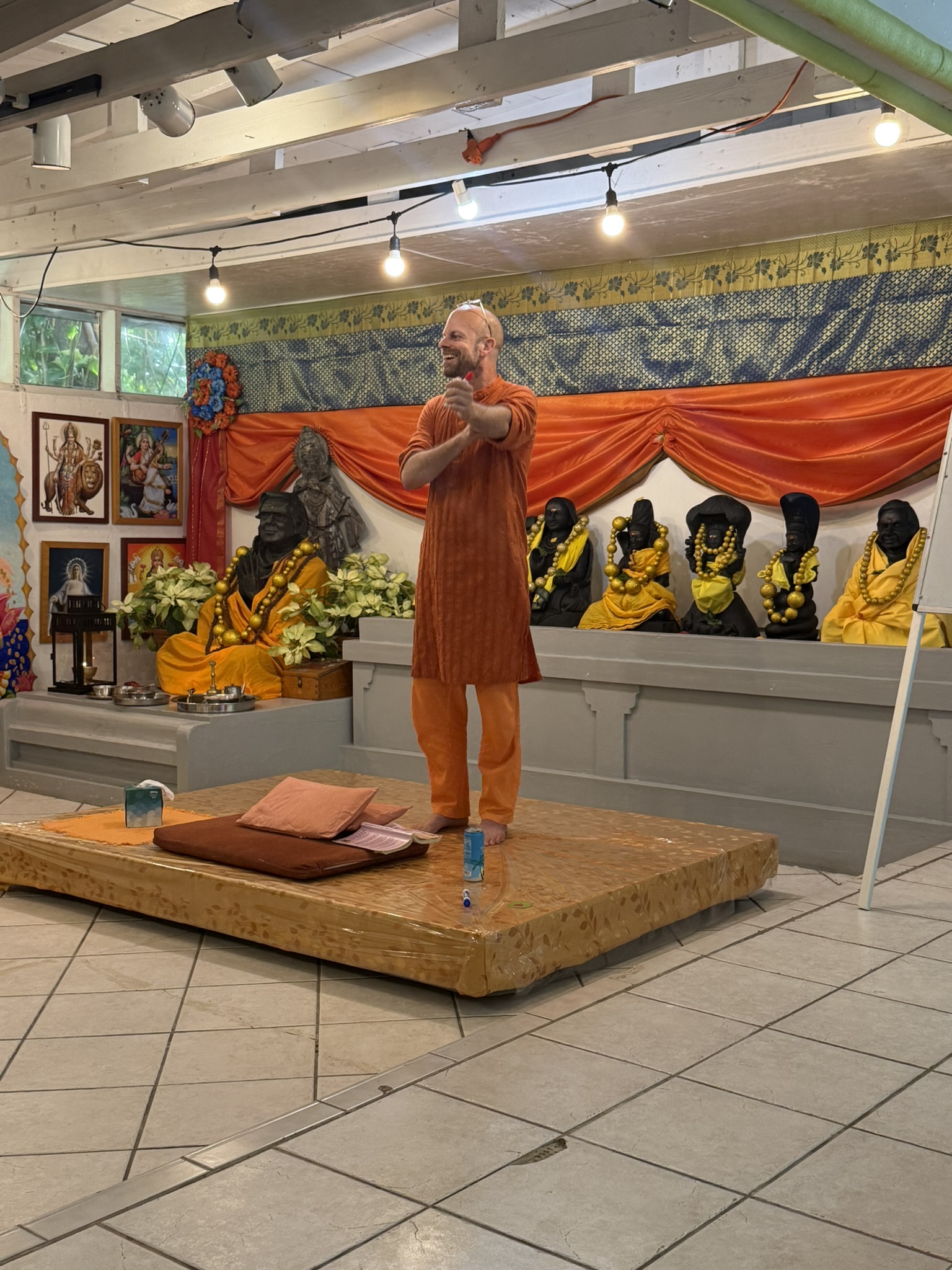
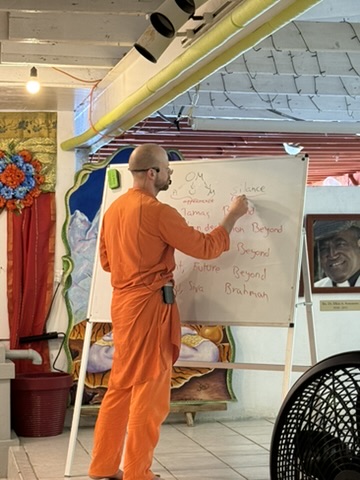
Raja Yoga-
MIP Study group
Week 1: Understanding the Purpose of Yoga & the Root of Suffering
A guided inner exploration into the nature of the mind and the root of suffering,
based entirely on the teachings of Swami Shambhudevananda.
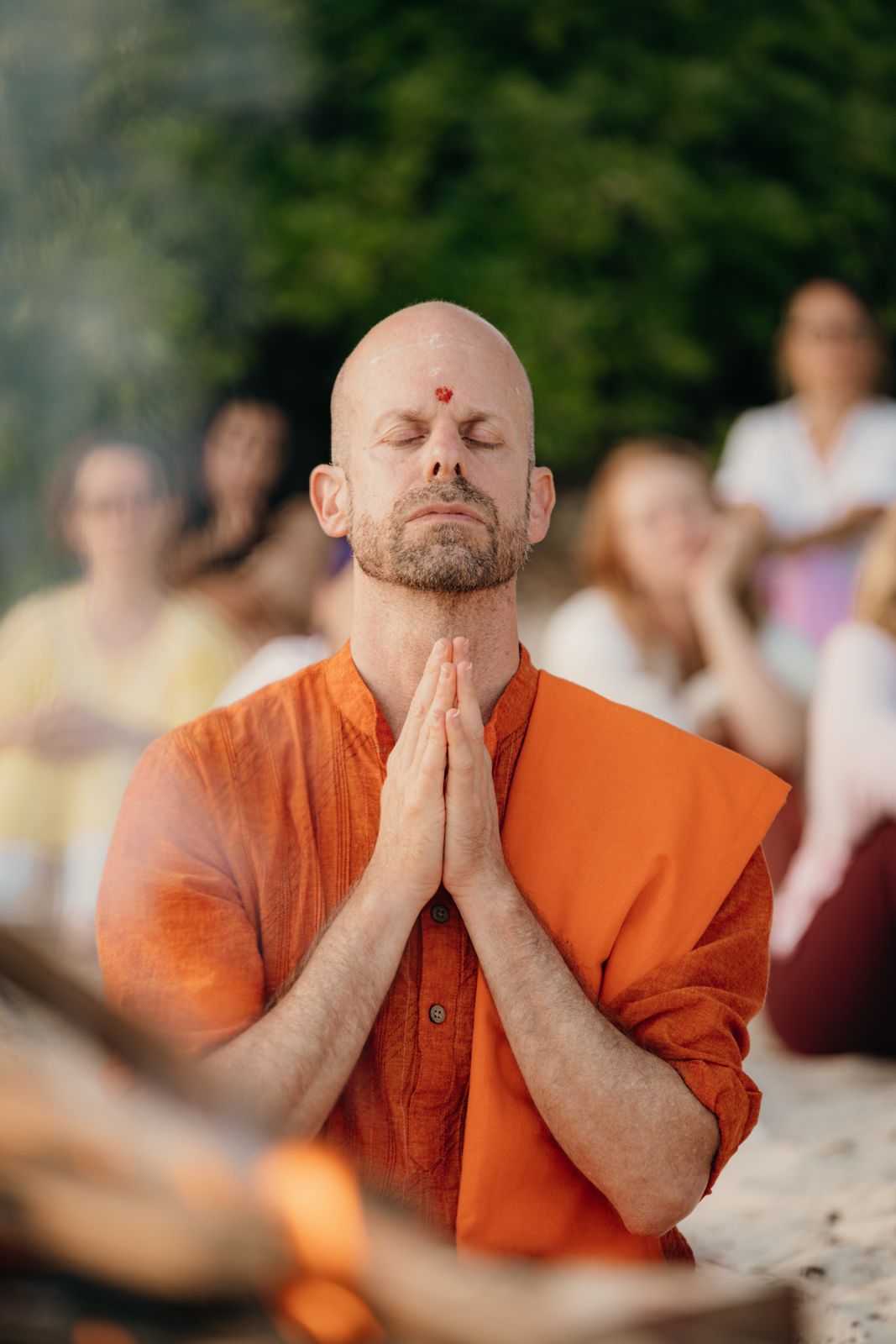
What is Raja Yoga
Raja Yoga is the royal path of mastering the mind.
Through the teachings of the Yoga Sutras of Patanjali, we explore the science of meditation, inner discipline, and spiritual awakening.
Each week, this study group reflects on a key teaching shared by Swami Shambhudevananda.
Here you will find a short summary of the class, key insights, and reflections to deepen your practice.
This space is meant to support sincere seekers who wish to understand the mind, refine their practice, and move steadily toward inner freedom.

The Eight Limbs of Raja Yoga: The Path to Mastery of the Mind
Vivamus id gravida mi, nec ullamcorper purus. Suspendisse ut nibh sagittis lacus viverra aliquam. Praesent ac lobortis mauris, non imperdiet quam. Praesent laoreet elit nisi, id feugiat ante accumsan sed. Vestibulum ante ipsum primis in faucibus orci luctus et ultrices posuere cubilia curae.
1. Yama – Ethical Restraints
Yama represents the universal moral principles that guide how we interact with the world and with others. These ethical foundations purify our behavior and help create harmony in our relationships.
The five Yamas are:
-
Ahimsa (non-violence)
-
Satya (truthfulness)
-
Asteya (non-stealing)
-
Brahmacharya (moderation of the senses)
-
Aparigraha (non-possessiveness)
2- Niyama – Personal Discipline
Niyama refers to personal observances that cultivate inner purity and spiritual discipline. These practices help develop a balanced and focused inner life.
The five Niyamas are:
-
Saucha (purity)
-
Santosha (contentment)
-
Tapas (self-discipline)
-
Svadhyaya (self-study and study of sacred texts)
-
Ishvara Pranidhana (surrender to the Divine)
3. Asana – Steady Posture
Asana refers to the practice of physical postures. In Raja Yoga, the goal of asana is not merely physical fitness but to develop a steady and comfortable posture that allows the body to remain still during meditation.
A stable posture helps calm the nervous system and prepares the mind for deeper practices.
4. Pranayama – Regulation of the Breath
Pranayama is the conscious regulation of the breath to influence the flow of life energy (prana) in the body. By slowing and refining the breath, the practitioner gains greater control over the mind and emotions.
Balanced breathing brings calmness, clarity, and inner stability.
5. Pratyahara – Withdrawal of the Senses
Pratyahara is the process of turning the senses inward. Instead of being constantly pulled outward by external objects, the practitioner learns to detach from sensory distractions.
This stage creates the inner quiet necessary for concentration.
6. Dharana – Concentration
Dharana is the practice of focusing the mind on a single point. This may be the breath, a mantra, a symbol, or an inner center of awareness.
Through concentration, the scattered energy of the mind becomes unified and powerful.
7. Dhyana – Meditation
Dhyana is uninterrupted meditation. When concentration becomes steady and continuous, the mind flows toward the object of meditation without distraction.
This state produces deep peace, clarity, and expanded awareness.
8. Samadhi – Spiritual Absorption
Samadhi is the culmination of the path of Raja Yoga. In this state, the distinction between the meditator, the process of meditation, and the object of meditation dissolves.
The practitioner experiences profound unity and realizes the true nature of the Self.
Bi weekly meeting

WEEK 1

WEEK 2

WEEK 3
From Swami Shambhudevananda Teaching


"Lorem ipsum dolor sit amet, consectetur adipiscing elit. Donec sed finibus nisi, sed dictum eros."
Igor Landry
2020 Alumn
This week in our Study group

June 23
Regular Admission
Vivamus id gravida mi, nec ullamcorper purus. Suspendisse ut nibh sagittis lacus viverra aliquam. Praesent ac lobortis mauris, non imperdiet quam. Praesent laoreet elit nisi, id feugiat ante accumsan sed. Vestibulum ante ipsum primis in faucibus orci luctus et ultrices posuere cubilia curae.