The yoga sutra of Patanjali
Raja Yoga-
MIP Study group
Lesson 1:
What, Who, and Why
Before Understanding… We Begin by Seeing
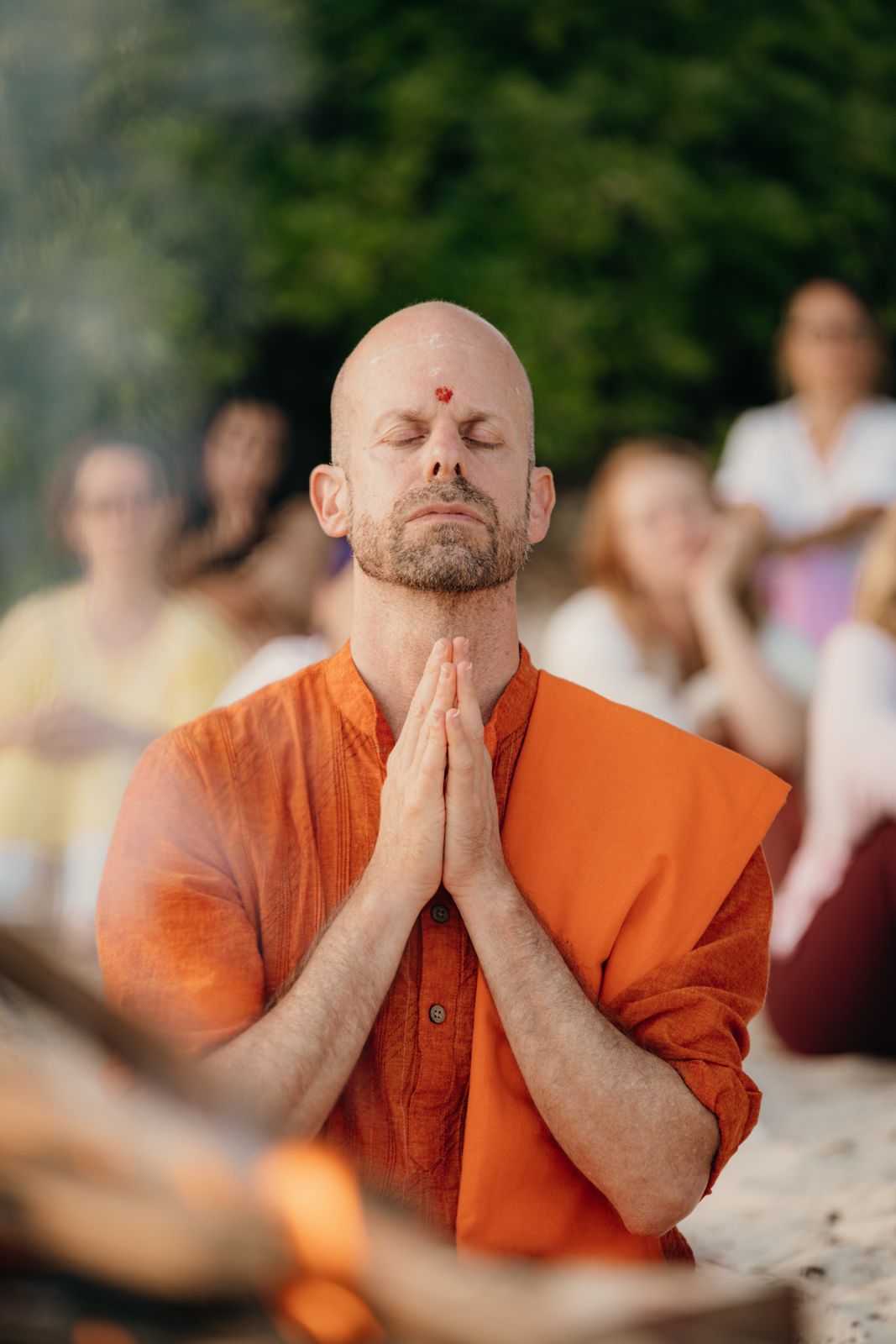
Welcome — What to Expect from This Study Group
Listening → Observing → Understanding → Applying→ Transforming
The Path of Raja Yoga
Listening
A seed is planted
Observing
The mind is seen
Understanding
Ignorance begins to dissolve
Applying
The teaching becomes your life
Transforming
The Self reveals itself
Let’s take a moment to arrive… not only physically, but mentally.
What is Raja Yoga ?
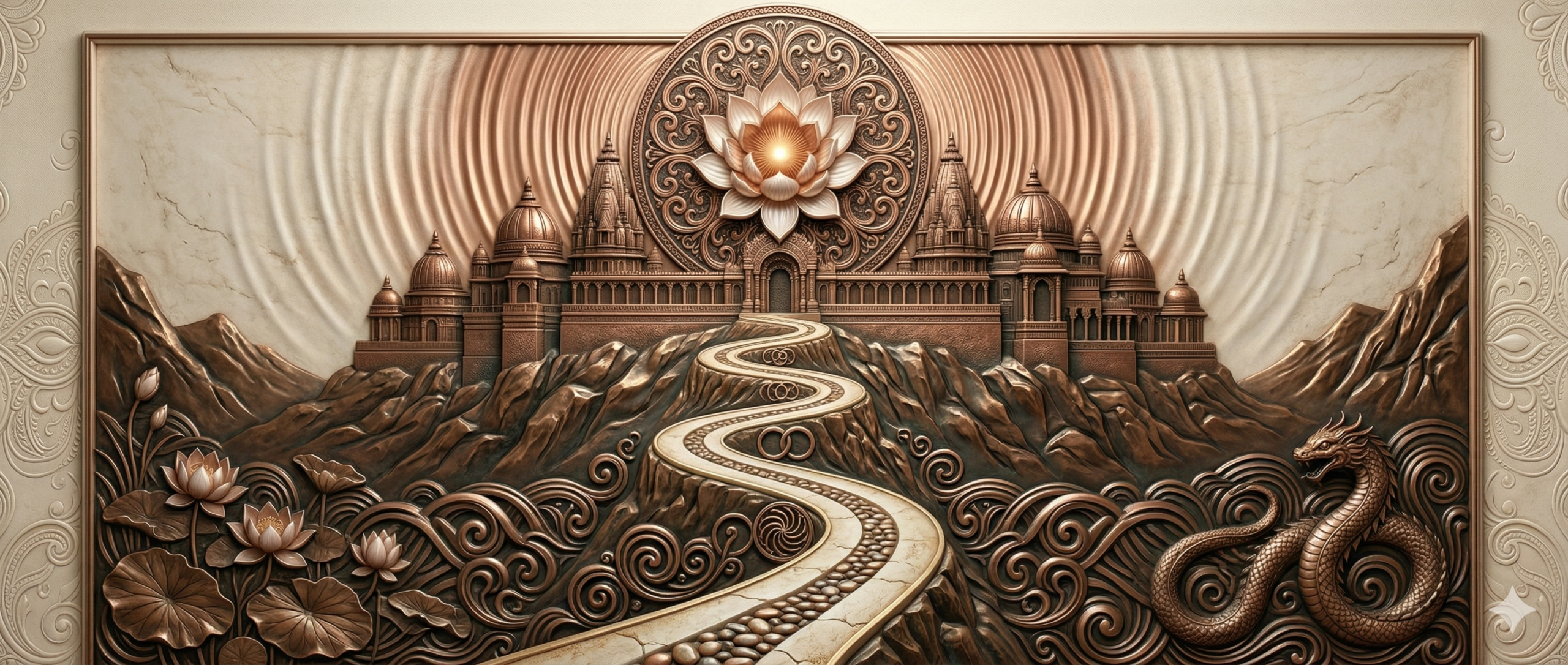
Raja Yoga is both a philosophy and a science of the mind.
It seeks to answer essential questions:
- What is the mind?
- What is suffering?
- Who am I?
But Raja Yoga does not stop at understanding.
It is a practical path — a method to observe the mind, to understand its movements, and to gradually free it from suffering.
It is a system of inner healing.
You are not asked to believe, but to observe, apply, and discover for yourself.
Who is Patanjali ?
The Legend of Patanjali’s Birth
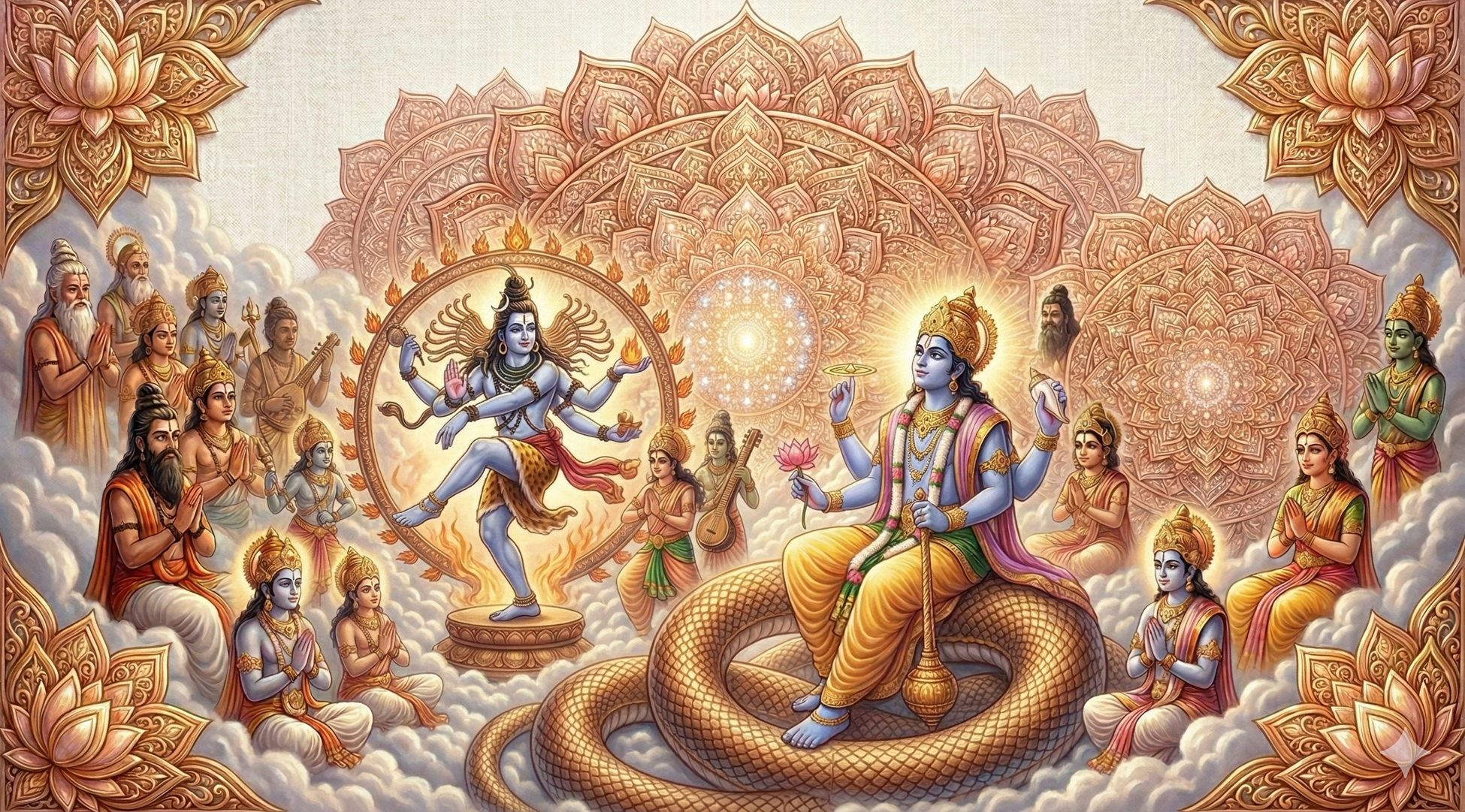
The Cosmic Origin
Adiśeṣa, the divine serpent, served as the resting support of Lord Vishnu.
As Lord Vishnu was absorbed in the cosmic dance of Lord Shiva, his body began to vibrate intensely and became unusually heavy.
Adiśeṣa felt this change and wondered about its cause.
He then understood that this heaviness was created by the powerful vibration of Lord Shiva’s divine dance.
Deeply moved by this experience, he desired to descend to earth to learn and share this sacred knowledge.
The Descent
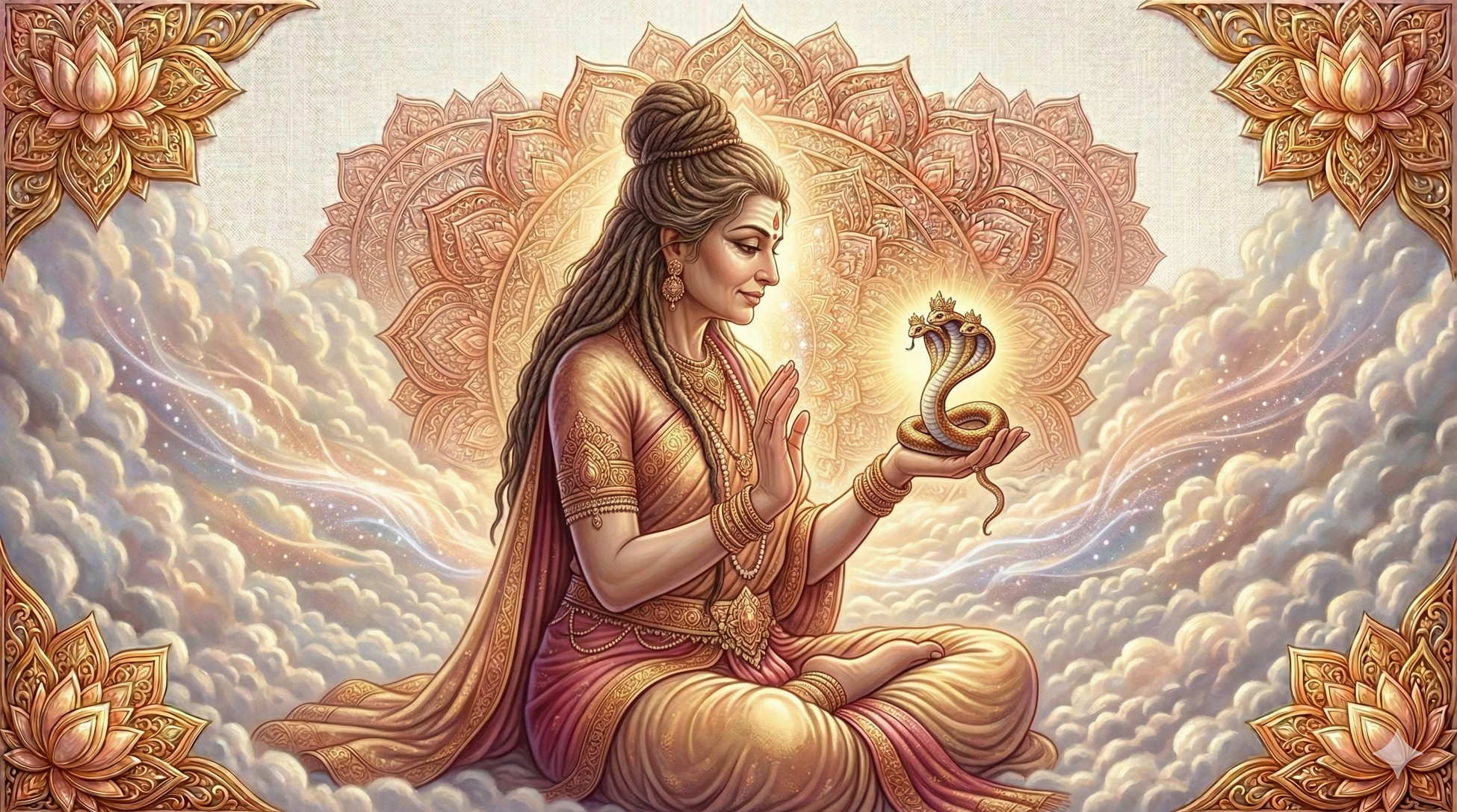
Adiśeṣa entered deep meditation to find a worthy mother on earth.
In his vision, he saw a devoted yogini named Gonika,
praying for a disciple to whom she could transmit her knowledge. One day, as she offered water to the Sun, she prayed with complete sincerity.
At that sacred moment, Adiśeṣa descended into her hands in the form of a small serpent. As he touched her palms, he transformed into a human child. Gonika recognized the divine nature of the child and accepted him as her son. She named him Patanjali —“the one who fell into folded hands.”
Patanjali — The Sage
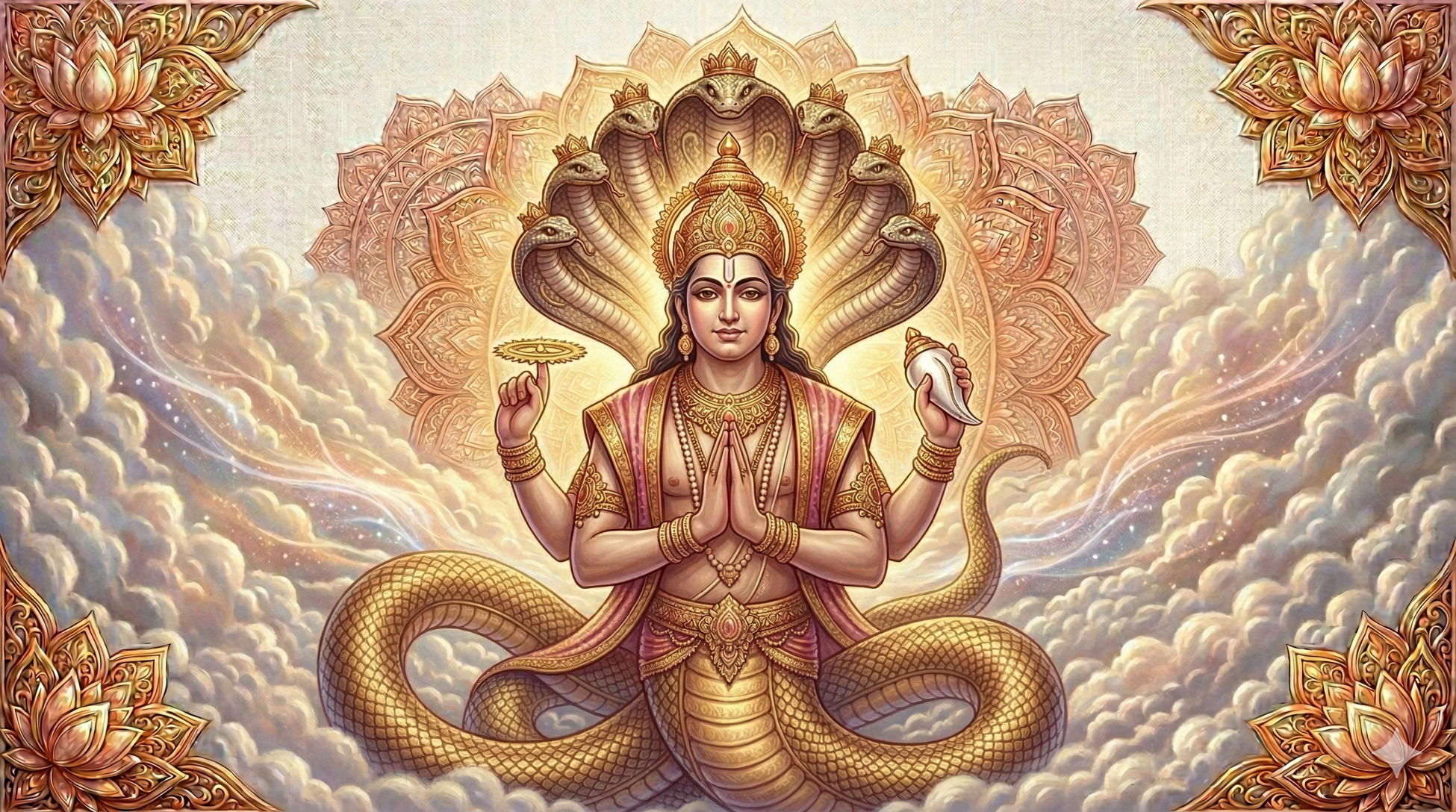
According to tradition — Patanjali was not only the compiler of the Yoga Sūtras. He was a great being who contributed to three fundamental aspects of human life.
He was a master of Yoga, offering a path for the healing of the mind. He was also a great scholar of Sanskrit, to whom is attributed the Mahābhāṣya — a profound commentary on the grammatical system of Pāṇini. Through this work, he brought clarity and refinement to speech. In addition, he is regarded as a great Ayurvedic physician, associated with the Charaka Saṁhitā,
one of the most authoritative texts of Ayurveda. Through this, he contributed to the healing of the body.
What does Adiśeṣa represent?
Adiśeṣa represents perfect stillness.
While everything in the universe is in constant movement, he remains completely steady.
He is the symbol of:
- stability beneath change
- stillness beneath activity
- awareness beneath the movements of the mind
In contrast, the human mind is constantly moving — thoughts, reactions, emotions, identification…
This constant movement creates confusion and suffering.
Patanjali, as an incarnation of Adiśeṣa, does not bring something new.
He brings a method to return to that same inner stillness.
In this course, we are not trying to control the mind immediately.
We begin by observing it.
Because only when we clearly see the movements of the mind
can we begin to understand them.
And from this understanding, stillness becomes possible.
Who is Patanjali ?
Patanjali is therefore remembered as a master
who offered a complete path of transformation:
-
for the mind through Yoga,
-
for speech through Sanskrit,
-
and for the body through Ayurveda.
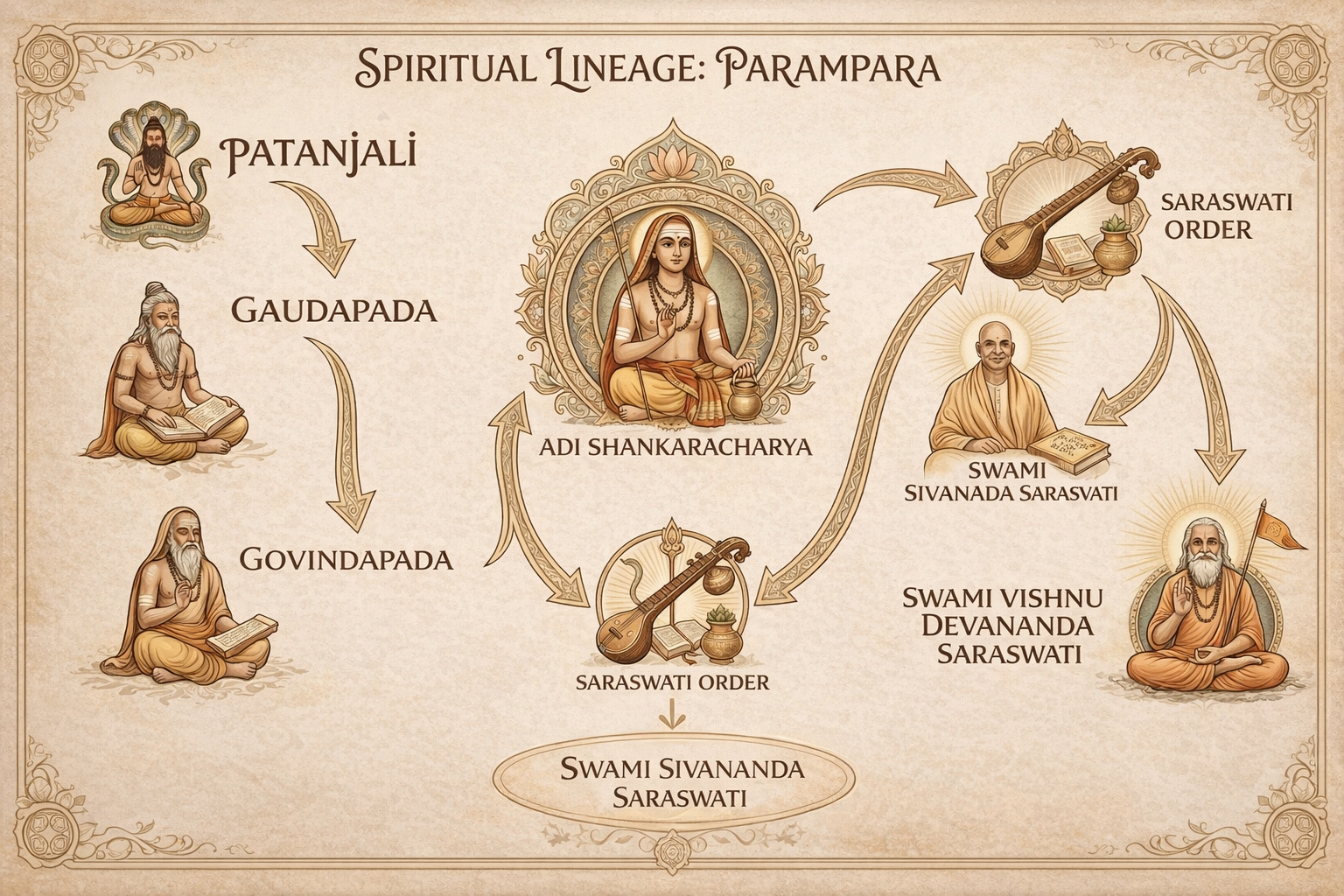
The teachings of Raja Yoga come from a living lineage, passed from teacher to student across generations.
Patanjali systematized this knowledge, offering a clear path to understand the mind.
This wisdom was transmitted to Gaudapada, then to Govindapada, and later to Adi Shankaracharya, who clarified and preserved these teachings.
Through the Saraswati lineage, this tradition continued to be passed on, reaching masters such as Swami Sivananda and Swami Vishnu Devananda.
Today, this same knowledge is still being transmitted — not as theory, but as a path to be lived and realized.
This is why our ashram is so precious:
it preserves and maintains this sacred knowledge
under the guidance of its Acharya, Swami Swaroopananda Saraswati.
Swami Shambhudevananda Saraswati is part of this lineage, and we are blessed to be part of it.
If Patanjali was a doctor…
What would he diagnose?
And what would he treat?
Before going to a doctor, we usually go because something is not right.
There are symptoms. Something feels off.
But before receiving a diagnosis, we must first observe.
In the same way, Patanjali approaches Yoga as a system of healing.
Not only to understand the mind — but to recognize what is not functioning properly.
This is where we begin.
Not with answers…
but with observation.
Practice of the Week with Swamiji
Enter this guided meditation with Swami Shambhudevananda. This practice is not about controlling the mind,
but about learning to see it as it is.
Through simple awareness, the movements of the mind become visible…
and what was unconscious begins to reveal itself.
Let yourself remain present, without effort, without judgment.
The 8 S's of Meditation
https://online.sivananda.co.il/video-src/bf34d8346f/56694Sankalpa — The Power of Inner Resolve
A sankalpa is not a wish —
it is a commitment to transformation.
This is my sankalpa
I choose to observe my mind with clarity and sincerity.
I choose to see things as they are, without distortion.
Through observation, understanding will arise.
Through understanding, I will apply the teaching in my daily life.
With patience and discipline, transformation will unfold naturally.
I remain steady, guided by truth, and committed to this inner path.— Ambika 🌸
What is yours?
Raja Yoga Teachings with Swami Shambhudevananda